The Twenty-fifth night
From the beginning art has always been a conjurer of the dead; a two faced discipline that twists its head around demonic possessions. (39) Tableaus of art are built on historic tables of self importance, the ghosts of masters occupying the spaces of ambition.
A final eulogy for painting is now constructed, ‘The Triumph of Marx’ (40) a masterpiece in sepia monochrome, depicting Marx’s ascendency over Hegel, with a supporting a cast representing the various spectres of his intellectual history. Ten bearded white men surround a table draped in a simple cloth, on which sits a single sheet of white paper and a Smith and Wesson 617 (41) loaded with a single bullet. Marx has assumed the tabula rasa and places his right hand firmly onto the blank page, the other characters watch in silent amusement whilst in the distance the smoke of recent battle clouds the landscape.
Marx and Hegel are joined within this historic scene by Shakespeare, Nietzsche, Aristotle, Plato, Kant, Ovid, Christ and God. Together they form the Decalogue.
Hegel has suggested that in order to settle the dispute a game of Russian roulette is undertaken. The loser will of course provide the first ghost; an apparition of a specific animating principle of the mind that the survivors will have to conjure with. Only God and Christ seem happy with this solution, the others shift their feet uneasily and mumble their dissent. “It’s too late for you to get out of this.” Marx interjects, and quickly forms them into a circle with the table at its centre. They are organised in alphabetical order.
ACGHKPMNOS
The game begins.
Aristotle has no fear and is glad to be first, at odds of 10 to 1 he realises that he has a good chance of success. Beads of sweat drip from his forehead, his neck and lower face are bright red with nervous tension, now he breathes in deeply. Raising the pistol to his head he squeezes the trigger.
Click!
Christ has been through this before and is eager to move the game on. It is as if he already knows the outcome. He raises the gun to his forehead and he calmly and firmly pulls the trigger.
Click!
God is in the gun and is everywhere the bullet has been and will be. He decides that this game will go no further, he touches the gun’s hair trigger.
Blam!!
The shocked nine stare at a suddenly empty space. They had not thought of this possibility but this is the logical conclusion of their thought, now acted out as bare reality. (42) For once they are all speechless.
Marx slaps Hegel in the face, the sharp sting of pain brings Hegel back to his senses. He, like the others, is still in trauma. Something momentous has happened but they know not what it is.
The removal of the opposition between the dead and the living has now been achieved. This in itself has forged a new being; capital being conceived in exchange value; this, the speculation of these specters.
39 The Exorcist: Directed by William Friedkin: A Warner Bros Film. 1973
40 Mark Tansey: The Triumph Of The New York School. 1984
41 The Smith & Wesson Model 617 K-Frame Revolver: 22 long rifle, 4 inch barrel, front sight: partridge front, rear sight: adjustable, rubber grips, square butt, satin stainless finish, 10 round capacity, weight empty: 41oz.
Perfect for everything from home defence to small game hunting and personal protection, the Smith and Wesson Model 617 K-frame revolver is heavy-duty enough to put out some serious stopping power while also allowing the shooter to maintain maximum control and precision.
42 Nietzsche, The Gay Science, Section 125
God is dead. God remains dead. And we have killed him. How shall we comfort ourselves, the murderers of all murderers? What was holiest and mightiest of all that the world has yet owned has bled to death under our knives: who will wipe this blood off us? What water is there for us to clean ourselves? What festivals of atonement, what sacred games shall we have to invent? Is not the greatness of this deed too great for us? Must we ourselves not become gods simply to appear worthy of it?
Monday, 28 February 2011

Friday, 25 February 2011
Reflections on reading Jacques Derrida’s Spectres of Marx (24)
The Twenty-forth night
The Apparition of the Inapparent
The phenomenological “conjuring trick”

We find Marx reflecting before a series of dark glass mirrors. (38) Distortions, reproductions, copies, replicates of himself are repeated endlessly, reflections of reflections each a token of his type. His shadow is unsure of which direction to take, outside it is the solar noon but inside this funfair hall is lit by a myriad of incandescent and fluorescent lights; the shadow waits, biding its time.
Marx has decided that the world needs no more fables. He is going to turn his attention to science.
The position of a ghost determines its spectral effect. However position is relative and in the case of a ghost, its position can only be measured by plotting its relationship to other ghosts. By means of quantized orbits, the spectral lines of ghost events can be mapped and relative intensities of these spectral lines positioned in relation to a "regular" matter universe. However the spectra of more complex forms won't exist here with us for very long because of the implications of pair production. In this case the ghost would be in the spectral cloud that forms about the nucleus of a spectre. This nucleus would hold the opposition pairs in stasis, with long-range interactions being sufficient to yield binding, if not scattering takes place and positioning is again impossible.
Only the corporality of the body can ingest these spectres. By living in the now the spectres of ancestors and false prophets are digested and defeated. Only by living in the phenomena of the present can we exist free of the shackles of our own shadow; by cutting it off we can stand tall in the open air, sunlit before the pure light of reason.
The dog returns from its wandering, it is not without intelligence and has an inner ear for inner dialogue. It inwardly muses; “Reason is itself a ghost born of a logocentric fallacy, as you hunt one ghost down another rises in its place, as you catch one another escapes. Smell is all there is and in smelling the craft is all. This craft is what makes the dog and in this making we create our own culture. Therefore a true understanding of our nature comes through the unselfconscious creation of another dog; this egological position being ecology’s tragedy".
The narcissisms of youth are its own comedy. Only the young watch their own bodies. They catch themselves in shop windows, every reflective surface a mirror for their vanity. Each glance releasing a ghost from the very edges of sight; ghosts barely glimpsed but with great future presence as they will feed upon the mourning minds of those who lament their passing adolescence.
Narcissus will always drown in his own tears, he mourns himself.
An innumerable, unnameable gathering of ghosts surrounds each mortal soul all through its mundane life, filling that vacuum thick with invisible fine layers and empty skins that fills the hollow space between the things that tether us to materiality and ourselves. As we walk we push our way forward through these ghosts and spectres as if through tall fields of corn, stalks and husks broken in our wake as we walk.
The identity of a specific spectre is lost in the generality of spectreness. Marx is fading away, he is not sure of what he has just heard.
“The ghost in the identity”
Or
“The ghost is the identity”
Identity loss is the key, as it disappears it leaves an empty body as a host for the ghost.
38 Corinthians 13:12 "For now we see through a glass, darkly."
The above text is taken from the King James Bible, the original 1611 edition being printed by Robert Barker, son of Christopher Barker, printer to Queen Elizabeth I. He also co-published the ‘Wicked Bible’ which states: “Thou shalt commit adultery”.
Tuesday, 22 February 2011
Reflections on reading Jacques Derrida’s Spectres of Marx (23)
The Twenty-third night
A Good Friday agreement is made for the resurrection of the dead; proof that miracles do happen. A precise location is required; one that is in sympathy with local lay lines and that can channel the earth’s energy at its maximum potential. The area is marked out and cut off from the rest of the territory. It resembles a seventeenth century hunt tableau as provided for the kings of France when in their pomp, when deer and boar were herded into fenced off areas, so that their majesties could not fail to slaughter creatures at their will. Marx can see the parallels and believes in the eating of ghosts as a type of spiritual nourishment. He has though yet to determine the site’s exact location.
Marx is unfolding a large map, as he opens it out, we begin to realize it is huge, its scale 1:1, each page opening out onto the world until eventually an exact correspondence is made. He is going to use this map to plot the route for the hunt, but as he opens its pages he is becoming enmeshed in brambles and tree branches, soaked in the waters of streams and up to his knees in muddy riverbanks. He is lost in his map, trapped within a useless topographical depiction, a man who has no backwoods knowledge and no survival skills.
The stalking and the shooting and the snaring will go on without him. The hunt is for the word made flesh, the hunters looking for that other, that in turn will mimic them. That other with a clever camouflage that apes the huntsman’s gait and stalks the stalker with his shadow; mimesis and alterity, the two sides of his game.
Marx is still trying to unfold the map. He believes in its veracity, even though he is very aware that all truths are simply narratives of conviction. Each more detailed sheet of the map reveals another layer of the world, and eventually atoms are seen; gradually as Marx peers into freshly unfolded pages he sees their quantum split and watches the waves of the positronic field that holds him in his space. Dimensions unfold as he opens the map, energy replaces matter and dark spaces unfold into dark matters, each fold of the map opening new universes and more dimensions of time and space. Minutes become hours and hours days, each unfolding now taking weeks and months for each page to unfurl its mysteries. Finally, in the dark recesses of space-time, Marx now has a vision of the specters and ghosts that haunt his dreams. He sees their form and knows their shape. He recognizes the old patterns from the dreams of his youth, he sees his death and stares at his own soul as it escapes his dead body shifting and morphing into new forms ready for the hunt.
Marx realises he was stalking himself. Setting traps for his own words, words that are rising in value by the minute as his stock begins to soar and his shadow overshadows all the ends of histories.
Monday, 21 February 2011
Reflections on reading Jacques Derrida’s Spectres of Marx (22)
The Twenty-second night
Freed from his past, Marx has decided to realise his true potential. He will reinvent himself as a prophet, become the new messiah and wear Roman robes. He imagines himself standing heroically on the steps of the White House, gazing down on the populace, who genuflect in his presence. They look up towards him and roar their approval, Marx raises his arms in acknowledgement, and the crowd responds with a repeated shout, “Long live Marx!” “Long live Marx!” “Long live Marx!” As they shout Marx gazes out over the sea of heads. He realizes that the crowd are wearing masks and helmets and that they shade their eyes with visors, they soon begin to shift uneasily under the scrutiny of his gaze. The people are haunted by ghosts and spirits of past revolutions, and their attention wanders. They see specters and ghouls starting to emerge from the dry ice effect that surrounds Marx in his classical pomp. Marx tries to regain their attention, “Let the dead bury the dead and let the living bury the living” he cries, but the crowd are worried and some people are pointing to a shadow below him, which descends slowly down the steps towards them. It had started beneath his feet but was now detached and has set forth looking for another body and the crowd sense its intent and rapidly start to disperse. The shadow that has lost its body is a dire thing. It will soon wander free into the world, and will cast its dark cloud over future events, souring revolutions and spoiling ballots as it passes through the future world.
Marx slips away before the crowd turns nasty; a dog chases its own shadow down the white steps of the White House.
Marx reemerges in London. He knows that only the secret revolution can be a revolution. He has infiltrated the New Labour party as a first step towards his goal, he is though soon denounced as a police undercover agent and expelled. He soon finds himself alone, unemployed and starving, unable to get dole he is forced to seek any work he can get. The only job on offer is as a gravedigger, a job he reluctantly takes up, but which he soon realizes he enjoys. He digs each grave with great determination and enthusiasm, rejecting mechanical aids in favour of good old-fashioned hard work. His hands are soon hard and callused, for the first time in his life he has the hands of a workman. He feels at home amongst the dead but watches carefully for signs of resurrection. He is apprehensive for the future and even more wary of the specters from his past.
Sunday, 20 February 2011
Reflections on reading Jacques Derrida’s Spectres of Marx (21)
The Twenty-first night
Neither a borrower nor a lender be, because the line between the two is unstable, the one predicates the other, only in inaction can action be taken. The ability to cease transactions, to shut up shop, being at the centre of a movement set up to deny the law of supply and demand.
Luther had his own Epiphany, one that Marx would inherit via a German translation of Catholic protestations never accepted in the South but lionised in the North.
The great wars of religion have mutated into wars of consumer attraction. Political war, wars of nationalisms, ethnic war and wars on Global terrorism are now consumed within the all out capital war that sets out to dominate all economic life.
Let the grand correction commence. (37)
The old hog-headed monarchy still haunts the politics of the West. Tears of the masses shed at Diana’s funeral, falling like rain on the dormant seeds of feudalism.
The Queen is dead; long live the Queen. Long live the Queen; the Queen is dead.
Historically we are all trespassers in our own homes; the modern demand for home ownership, a fetish that mystifies our relationships with others and deviously skews our lives towards isolation and a fortress mentality; is but a brief candle that will be snuffed out by the winds of a coming socialism.
Marx has become a stranger to himself. He looks into the mirror and doesn’t recognise the features that stare out at him. His reflection appears out of synch and he makes small unpredictable movements with his mouth, he grimaces and watches this stranger attempt to do the same. He is out of step with his twin. He begins to recite from his own writings, but cannot remember exactly what he wrote, but this doppelgänger has no problem. Marx isn’t sure anymore who wrote the words that he is hearing spoken in his head. “Who wrote these words, him or me?” he asks. He will never know, all words when read become the property of the reader. Marx slowly realises he has had all his property stolen, every last word now looted by anarchists and revolutionaries.
37 A refrain taken from a Chris Wood CD, Handmade Life (R.U.F Records, 2009) the particular track is called: "The Grand Correction"
Saturday, 19 February 2011
Reflections on reading Jacques Derrida’s Spectres of Marx (20)
The twentieth night
There is a false parade of solidarity marching past the Vatican. Lost in party politics the soul can eat itself, each member bodiless and craving other’s bodies as its own, creating hybrid monsters of totalitarian desire. These are the creatures of the night that come in dreams and vote the party line; their manifesto a manifest of mealy men in mannered moulds that make martyrs of the flesh. This cannibalistic credo is a manifleshto of the dead.
During the day Marx is being recreated by his makers; monarchists, imperialists, republicans and capitalist money launderers. They sculpt him from red clay and intend to raku fire his body in a sawdust pit. Left to cure at night, his body stirs, the spirit is within him. The secret name of God emblazoned on his brow, he rises with the morn, his inner fire glows white, his eyes now blaze with Heavenly light, he stands, opens his mouth and flames belch forth with his first words, “They know not what they do”, (36) in his heart he knows morality is the darkest of conspiracies, he steps out into the abyss of freedom, hoping that fantasy will fill the gap before he falls. He is terrified of what will come, frightened of the consequences of his actions and yet determined to see this day out to its conclusion.
36 a. For they know not what they do: Enjoyment as a Political Factor. A book by Slavoj Žižek, that attempts to grapple with the disintegration of state socialism, and the rise of hedonism. Like Derrida, Žižek often quotes Shakespeare, in this case he refers to Brutus and his anxiety before setting out to murder Caesar. In the popular radio four program, 'Desert Island Discs' participants are always given a copies of the Bible and Shakespeare to take with them. It is presumed that everyone would want to take these two texts. These texts it is presumed stand at the heart of Western English speaking culture.
Act 2 Scene 1 Julius Caesar: Brutus contemplates his immanent actions:
Since Cassius first did whet me against Caesar,
I have not slept.
Before the acting of a dreadful thing
And first motion, all the interim is
Like a phantasma, or a hideous dream
The Genius and the mortal instruments
Are then in council; and the state of man,
Like to a little kingdom, suffers then
The nature of an insurrection.
36 b. Luke 23:34: Then Jesus said, "Father forgive them, for they know not what they do".
Friday, 18 February 2011
Reflections on reading Jacques Derrida’s Spectres of Marx (19)
The nineteenth night
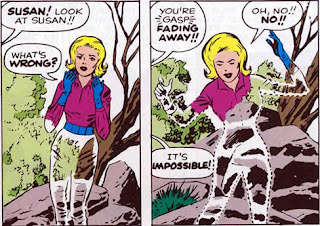
The artist seeks the invisible through the visible. He is however worried by iconoclasts and wants to ground his position in theory.
At the Second Council of Nicaea in 787 (33) after much debate and argument it was decided that the more frequently images of God and saintly holy men are seen in representational art, the more are those who see them drawn to remember them and long for those who serve as models. The argument was in particular related to the earlier Epitome of the Definition of the Iconoclastic Conciliabulum held in 754 which declared: "Supported by the Holy Scriptures and the Fathers, we declare unanimously, in the name of the Holy Trinity, that there shall be rejected and removed and cursed from the Christian Church every likeness which is made out of any material and colour whatever by the evil art of painters.... If anyone ventures to represent the divine image of the Word after the Incarnation with material colours, let him be anathema! .... If anyone shall endeavour to represent the forms of the Saints in lifeless pictures with material colours which are of no value (for this notion is vain and introduced by the devil), and does not rather represent their virtues as living images in himself, let him be anathema!"
The Edict of Yazid was also debated at the Second Council, and the fact that the Islamic Caliph had supposedly declared that every representational painting be destroyed and thoroughly abolished, was used as a political argument to support the fact that a Christian edict should determine a necessary difference in doctrine.
Despite awareness that history repeats itself (34) and that religious doctrine can be determined by political realities the artist has decided to continue with his quest. He sets out to describe an invisible spirit and begins to create a series of small dashes that gradually define the outline of a female human form. (35) Within these lines he paints the continuation of a landscape that appears to be seen through the woman’s figure. He believes he has hit upon a unique form of popular religious painting that also recognises the role of nature and the spirit of Rousseau. However, when there is nothing to see, what do we see? Perhaps entoptic phenomena are the only images that have travelled with us from the earliest times, the artist’s lines a bear close resemblance to dashed lines in Paleolithic art.
33 The Second Council of Nicaea in 787 issued a statement to this effect: ... we declare that we defend free from any innovations all the written and unwritten ecclesiastical traditions that have been entrusted to us. One of these is the production of representational art; this is quite in harmony with the history of the spread of the gospel, as it provides confirmation that the becoming man of the Word of God was real and not just imaginary, and as it brings us a similar benefit. For, things that mutually illustrate one another undoubtedly possess one another's message. ... we decree with full precision and care that, like the figure of the honoured and life-giving cross, the revered and holy images, whether painted or made of mosaic or of other suitable material, are to be exposed in the holy churches of God, on sacred instruments and vestments, on walls and panels, in houses and by public ways; these are the images of our Lord, God and saviour, Jesus Christ, and of our Lady without blemish, the holy God-bearer, and of the revered angels and of any of the saintly holy men. The more frequently they are seen in representational art, the more are those who see them drawn to remember and long for those who serve as models, and to pay these images the tribute of salutation and respectful veneration. Certainly this is not the full adoration in accordance with our faith, which is properly paid only to the divine nature, but it resembles that given to the figure of the honoured and life-giving cross, and also to the holy books of the gospels and to other sacred cult object.
34 A reference to the opening sentences of Marx’s The Eighteenth Brumaire of Louis Bonaparte (1852). The actual words were: "Hegel remarks somewhere that all great, world-historical facts and personages occur, as it were, twice. He has forgotten to add: the first time as tragedy, the second as farce."
35 The animated TV series Rugrats, introduced a parody character, Miss Invisible, in the episode "Mega Diaper Babies"; in the same episode, another invisible character appears called "Dotted-Line Girl". This character is in turn a knowing reference to how Susan Storm the Invisible Girl of Marvel Comic’s Fantastic Four was usually depicted by the artist Jack Kirby. Rugrats: Season 3, Episode 21 First broadcast: 13 March 1994.
Subscribe to:
Posts (Atom)